The FAN Club Method: How Neighbors and Associates Help Solve Genealogy Mysteries
If you keep searching for one ancestor in isolation and getting nowhere, that is your sign to widen the frame. Stop looking only at the person. Start looking at the people around them.
In genealogy, FAN stands for Family, Associates, and Neighbors. This method matters in every kind of research, but it is especially powerful in African American genealogy. Our ancestors were documented unevenly, renamed by others, moved under force, and too often left out of the records altogether. When the paper trail for one person is thin, the community around them often carries the evidence forward.
1. Why the FAN Club method works so well in African American genealogy
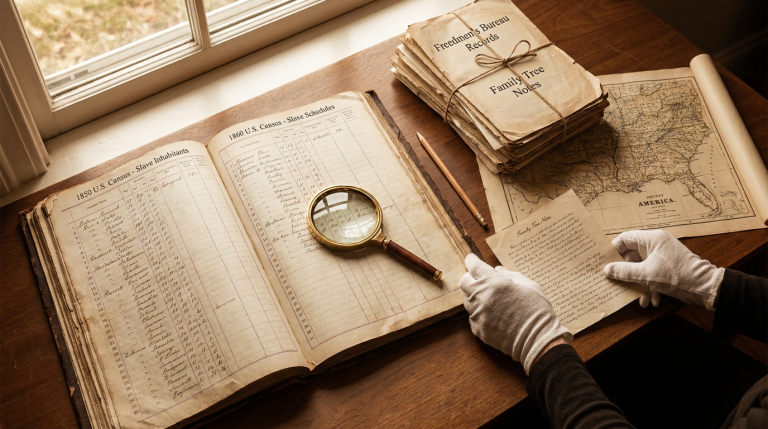
Many African American researchers hit the same wall: they find a relative in 1870 and then the trail gets weak fast. That is not because the family disappeared. It is because slavery distorted the record. Before Emancipation, your ancestor may not have been named in the records at all. After Emancipation, spelling shifts, age changes, migration, and unstable surnames can make one person hard to track from document to document.
That is where the FAN Club method earns its place.
Family tells you who moved together, who appeared in the same household, who named the same children, and who showed up in the same probate, pension, or death records. Associates tell you who witnessed a marriage, who stood as bondsman, who bought land next door, who attended the same church, or who migrated along the same route. Neighbors tell you who lived close enough to matter because in rural communities and segregated urban neighborhoods, proximity was often relationship.
For descendants of the enslaved, this is not extra work. It is often the work. If you cannot find your ancestor named before 1870, you may find a possible brother in a Freedmen’s Bureau labor contract, a widow next door in 1880 who came from the same county, or a church trustee whose surname keeps appearing beside your people. Follow that cluster and the family begins to take shape.
2. How to build a FAN network that actually helps you solve a problem
Start with a specific question. Not “Who were all the neighbors?” Ask something useful: Who moved with this family from Virginia to Ohio? Who might connect my 1870 household to an earlier enslaver? Why does this surname keep appearing around my people?
Then work outward from a known record.
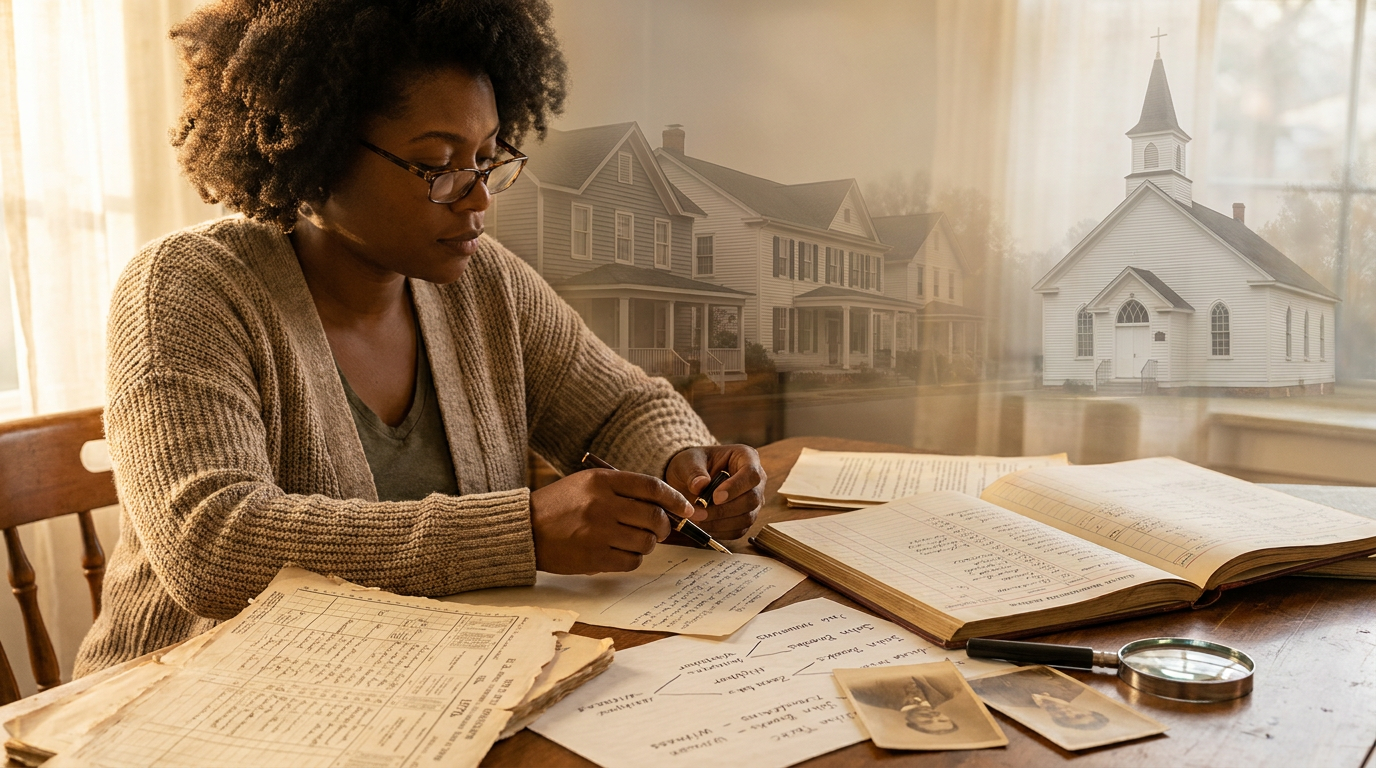
Start with the 1870 census. Do not stop at your ancestor’s line. Read the whole page. Then read the page before it and the page after it. Write down the surnames of nearby Black households, mixed households, and white households with economic or geographic ties to the area. Look for recurring birthplaces, occupations, ages, and naming patterns.
Next, move to records that show relationships indirectly:
- Marriage records: witnesses, bondsmen, ministers, and sureties matter.
- Death certificates: the informant may be a daughter, neighbor, niece, or church member.
- Church records: membership rolls, baptisms, marriages, and burial entries often hold whole networks.
- Land and deed records: adjoining landowners are not filler. They are clues.
- Freedmen’s Bureau and Freedman’s Bank records: these often identify kin, former enslavers, employers, and migration connections.
- City directories and newspapers: these help you track households between census years and identify social ties.
Build a simple research log with four columns: name, relationship or possible relationship, record found, and why this person matters. That last column is where the method becomes useful. Do not just collect names. Define the clue. “Witness on marriage license for Sarah Carter in 1882.” “Lives two households away in 1870 and shares Halifax County, Virginia birthplace.” “Buried in the same church cemetery section.”
If you keep this organized, patterns will show up fast. A surname that seemed random in one record becomes important when it appears in a pension file, on a church committee, and next door in the census.
3. What to watch for, and where researchers go wrong
The biggest mistake is assuming every nearby person is kin. They are not. Some are relatives. Some are former enslavers. Some are co-workers. Some are fellow migrants from the same county. All of that matters, but it is not the same thing.
Your job is to separate possibilities from proof.
Treat every FAN connection as a lead first. Then test it. If you think two men are brothers because they live near each other and share a surname, look for stronger evidence: probate records, military pensions, obituaries, death certificates, church membership, or a common parent named in another document. If you think a white family nearby may connect to enslavement, test that through probate inventories, deeds, tax lists, estate divisions, and local histories.
Another mistake is failing to track women in the network. Do not do that. Sisters, mothers, widows, daughters, and in-laws often carry the most stable evidence across time because they appear as informants, caregivers, church members, and household anchors. If a man disappears from the record, a sister’s death certificate or a widow’s obituary may be what brings the line back into focus.
Also, pay attention to migration chains. Black families rarely moved in isolation. They followed kin, work, churches, railroad routes, and known communities. If your people left Georgia for Philadelphia, look for who else made that move. If they went from a plantation county in Virginia to Cincinnati, ask which surnames traveled with them. Migration is often a group story before it becomes an individual one.
This week, pull one census page for a known ancestor and make a list of every person in the three households before and after them. Then trace just three names from that list into one more record set: church, marriage, city directory, deed, or death record. That is how you build a real FAN network.