Latest posts

  • African American Genealogy Tips

    African American Genealogy Tips

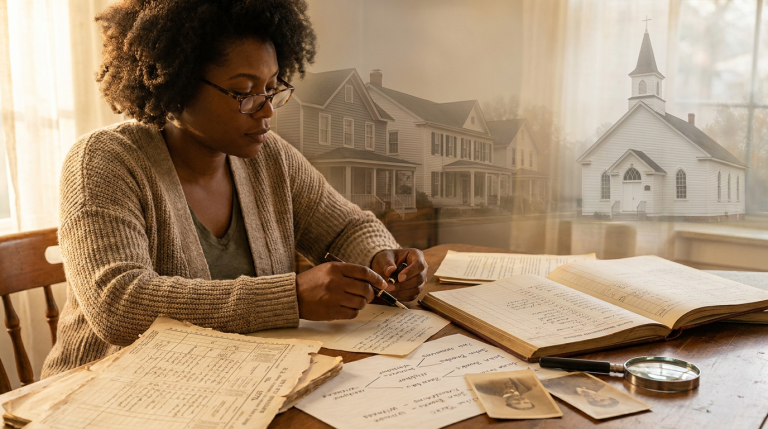
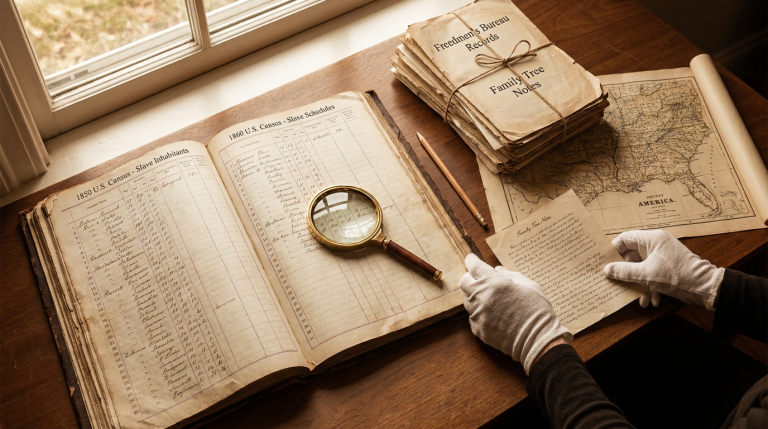
    Researching African American genealogy can be challenging due to gaps in records caused by slavery, segregation, and other historical factors, but there are strategies and resources that can help overcome these obstacles. Here’s a list of strategies tailored for African American genealogy research: 1. Start with Oral History 2. Use Census Records 3. Explore Freedmen’s Bureau Records 4. Look at Probate and Wills 5. Examine Plantation and Slaveholder Records 6. Use Military Records 7. Examine Church and Community Records 8. Migration and Immigration Records 9. Check African American Newspapers 10. Utilize DNA Testing 11. Research Free People of Color 12.…

  • The Missing Children of Slavery

    The Cruelest Separation One of the most devastating realities of American slavery was the forced separation of families — especially children from their parents. Enslaved children could be sold at any age, often without warning, to settle debts or increase profit for enslavers. This wasn’t just a tragedy in the moment — it had ripple effects for generations. The loss of family connections meant lost history, broken inheritance lines, and genealogical gaps that descendants still struggle to close today. The Numbers We Don’t Talk About Historians estimate that one-third of enslaved children in the antebellum South experienced separation from one…

  • The Black Church: Keeper of Family History

    The Black Church: Keeper of Family History

    More Than a Place of Worship For African Americans in the 19th century, the church was more than just a spiritual home — it was a sanctuary, a school, a political hub, and an archive. When county courthouses refused to record African American births, marriages, or deaths, the Black church quietly took on the role of recordkeeper. These handwritten ledgers, baptism lists, and marriage rolls may be the only surviving documentation of some African American families for decades after the Civil War. Why the Church Became the Recordkeeper During Reconstruction, the legal system was slow — and often unwilling —…

  • 40 Acres and a Broken Promise

    40 Acres and a Broken Promise

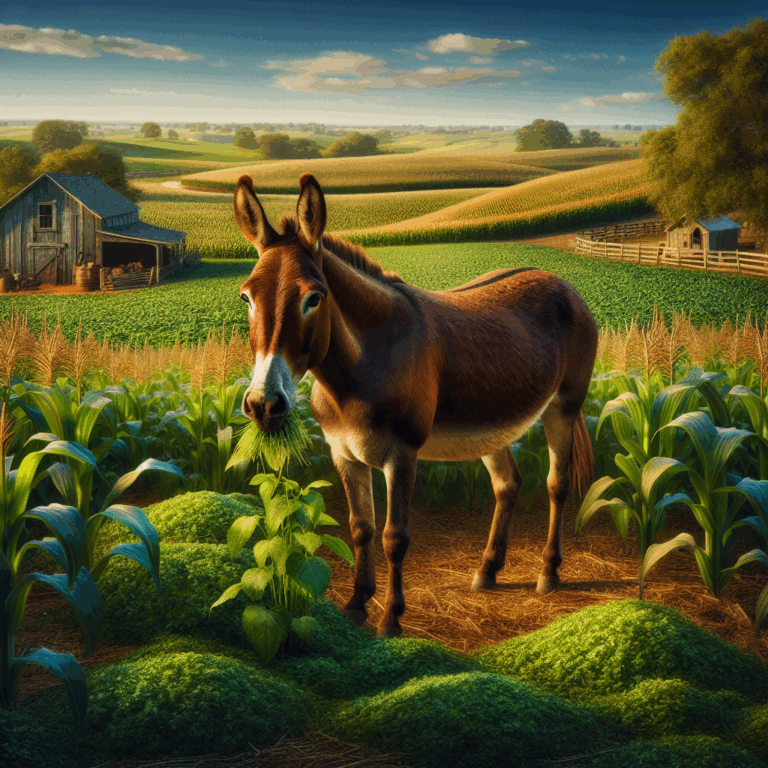
    A Promise of Land, A Future of Loss In January 1865, as the Civil War drew to a close, Union General William T. Sherman issued Special Field Order No. 15. This order promised formerly enslaved African Americans in coastal South Carolina, Georgia, and Florida plots of land — up to 40 acres each — and, in some cases, the use of surplus mules from the army. It was more than just land. It was a chance for self-sufficiency, dignity, and the generational wealth that had been denied for centuries. When the Dream Became Reality — Briefly Contrary to the myth…

  • The Family Names We Didn’t Choose

    The Family Names We Didn’t Choose

    When a Name Isn’t Truly Yours For most people today, a surname is a proud family marker, passed down through generations. But for many African Americans, the names we carry were not chosen by our ancestors — they were given, taken, or forced upon them in the aftermath of slavery. After emancipation in 1865, newly freed African Americans faced a strange new challenge: deciding what to call themselves in a society that had long denied their personhood. Some chose the surname of their former enslaver, either because it was the name they had been known by in legal records or…

  • The Fragile Paper Trail of Freedom

    The Fragile Paper Trail of Freedom

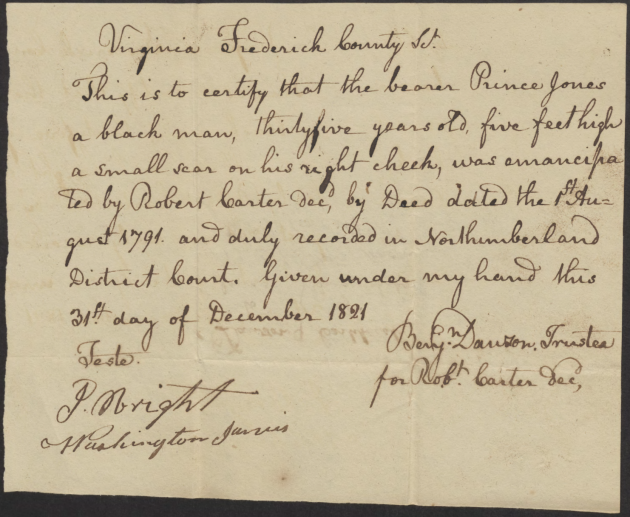
    The Document That Could Mean Life or Death Before 1865, one slip of paper could decide your entire future. For a free African American, that document was called a freedom paper — and without it, freedom could be stolen in an instant. Freedom papers served as legal proof that the person carrying them was not enslaved. They listed the individual’s name, age, height, complexion, and identifying marks. In some cases, the document included the name of the person who had granted freedom or details of a court order. But these papers were far from secure. They could be lost, stolen,…

  • Never Pleasing to This World: Robert Carter’s 1791 Deed of Gift

    Never Pleasing to This World: Robert Carter’s 1791 Deed of Gift

    The Black Family Genealogy and History Society is pleased to invite you to our next Virtual Presentation and Business Meeting. When: Saturday November 9, 10:00 AM Arizona Time (MST/PDT) Register in advance for this presentation: After registering, you will receive a confirmation email containing the Zoom link to join the meeting. We encourage you to invite a friend. Please add them to the guest list by sending their name and email address to contact@bfghs.org.

  • “Are We Really Free?” Speaker Series

    “Are We Really Free?” Speaker Series

    The JLPGC DEIB Council is excited to present our Fourth Annual Juneteenth, “Are We Really Free?” Speaker Series, on Monday, June 17, 2024, from 7:00 – 8:30pm. Our topic this year is Genealogy and How Our History Shapes Us. We will have two dynamic subject matter experts to discuss their backgrounds in tracing familial connections and the rich history of the African American experience in the DMV area. Please join us for what promises to be an informative and enriching discussion! To register visit https://tinyurl.com/jlpgcjuneteenth

  • Weekly Q&A
  • Black History Roundtable at 77WABC New York, NY
Protected By
Shield Security